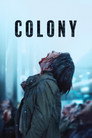
The director who made Korean cinema’s definitive zombie film is bringing his follow-up to U.S. audiences. Yeon Sang-ho, whose 2016 Train to Busan redefined what the genre could do, opens Colony in American theaters on August 28 via Well Go USA.
The film premiered in Cannes’s Midnight section on May 15 before opening in South Korea six days later, earning $32.4 million domestically on a ₩17 billion (~$12 million) budget and $48.1 million worldwide. Jun Ji-hyun stars as Kwon Se-jeong, a biotech professor sealed inside a building after a mutating virus triggers an outbreak. The infected in Colony operate differently: connected through a mycelial network, they share sensory data and adapt collectively. Individual zombies become nodes in a larger organism.
That design required a different approach to staging. “The hardest part was figuring out how to visually express zombies that exist in the form of a colony with collective intelligence,” Yeon told Variety this week. “To convey that intuitively to the audience, the movement of the zombies had to be unique.” He brought in modern dance teams to choreograph the collective movement, replacing the breakdancers he used for the feral momentum of Train to Busan’s infected.
The thematic ambition runs deeper than the biology. Yeon has said the film was built around a specific contemporary anxiety: “All along my works, I always tried to express the fear or the horror of today’s society. For me, the greatest fear is the high-speed communication exchange. It’s like a living organism and, in a way, it reduces our individualism, our individuality.” Colony frames that dread as literal, embodied, and contagious.
Ten years on from Train to Busan, Yeon Sang-ho has found a new way to make zombie horror feel urgent.