The Arrival
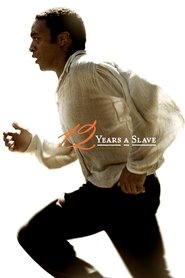
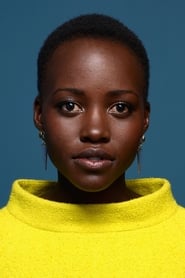
Lupita Amondi Nyong'o was born in Mexico City and raised in Nairobi from the age of three. She studied film and theatre at Hampshire College, then earned a master of fine arts in acting from Yale School of Drama. Her early television work included the Kenyan series Shuga, which ran from 2009 to 2012. Then, in 2013, Steve McQueen cast her as Patsey in 12 Years a Slave.
At the Academy Awards ceremony in 2014, Nyong'o took the prize for Best Supporting Actress. She was 30. What the industry expected to follow, a careful consolidation, did not materialize. Instead, Nyong'o moved sideways.
The Shapeshifter
She joined the Marvel Cinematic Universe as Nakia in Black Panther (2018), a role that gave her a global franchise and a character with genuine moral weight. A year later, Jordan Peele cast her in the dual lead of Us: a mother and her doppelgänger, two entirely opposed interior states requiring simultaneous inhabitation. The performance confirmed something her career had already suggested. She does not simply play characters. She occupies them.
Between those films, she appeared as the motion-capture character Maz Kanata in the Star Wars sequels. In 2024, she led A Quiet Place: Day One as Samira, then voiced the central character in DreamWorks' The Wild Robot. Her filmography reads less like a climb than a lateral expansion: she follows the work, not the conventional path.
The Double
Christopher Nolan's The Odyssey, opening July 17, casts Nyong'o as two women at the center of the Trojan War's domestic catastrophe. Helen of Troy, married to Jon Bernthal's Menelaus. And her sister Clytemnestra, married to Benny Safdie's Agamemnon. She is the first actor to play both sisters in any adaptation of Homer's poem.
"I was stunned when Chris told me he wanted me to play these two iconic characters," Nyong'o said during The Odyssey press tour. The creative challenge, she explained, was interior. "The goal for me was to try and create distinctions that were internal." Nolan, she noted, "is really interested in the interiority." Both women experience the war from the outside in. The film, Nyong'o said, explores "the cost of war on everybody. Those who go to war, those who are left behind, or those who caused the war."
The 172-minute film is already tracking as a 2027 awards season contender. For Nyong'o, it is another lateral move: this time into mythology, and into two bodies at once.