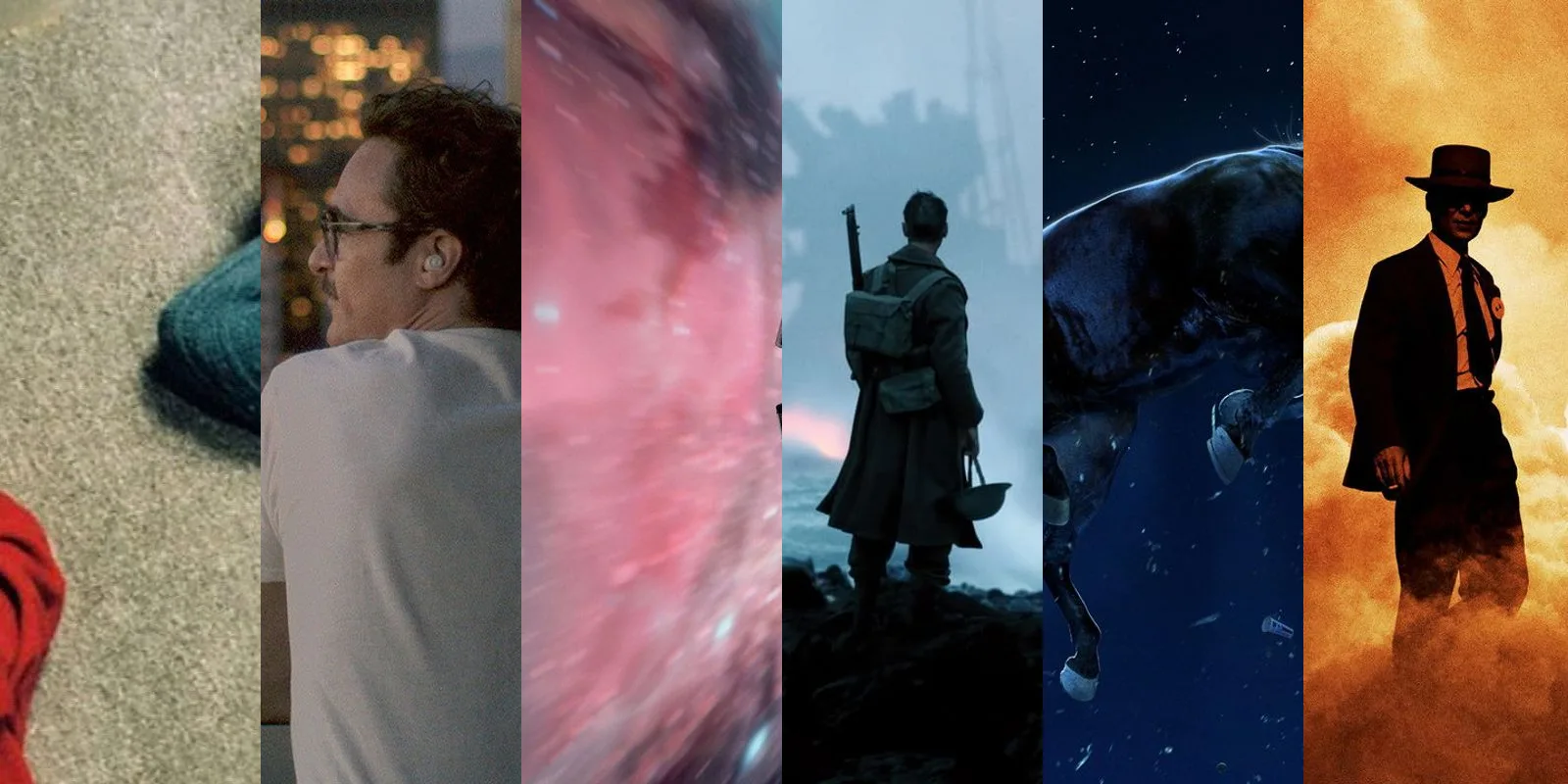
Hoyte van Hoytema did not get into film school on the first try. Or the second. After two rejections from Dutch institutions, he worked in a soap factory and a carpentry factory before enrolling at the Łódź Film School in Poland. He has said that what shaped his career happened in Sweden. Looking at the filmography, that holds.
The Frame
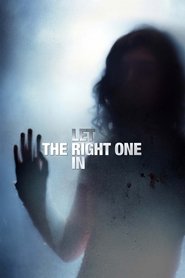
His Swedish work built the foundation. Tomas Alfredson's Let the Right One In (2008) was the film that made the international industry pay attention. Van Hoytema won a Guldbagge Award for Best Cinematography for his work on it. The cinematography was cold and close and patient. A vampire film that moved like grief. His Swedish run also produced Flickan and Call Girl (2012), earning him three Guldbagge Awards across four years. He is a member of the American Society of Cinematographers, the Swedish Society of Cinematographers, and the Netherlands Society of Cinematographers.
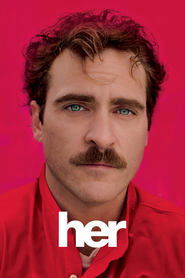
The pivot came with Spike Jonze's Her (2013), his first major American production. The palette was warm where his Swedish work was cold. Los Angeles was shot as a kind of soft archive. The collaboration introduced him to a wider conversation about what light could mean in contemporary cinema.
The Long Game
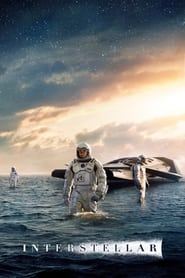
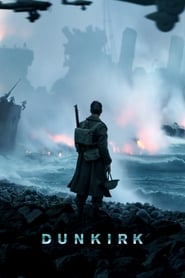
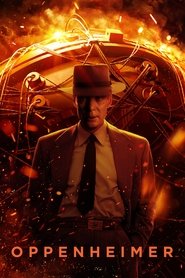
Christopher Nolan hired him for Interstellar (2014), and the partnership that followed has become the most sustained director-DP collaboration in contemporary studio filmmaking. Working on large-format film from the beginning, van Hoytema and Nolan developed a shared grammar of physical scale. Dunkirk (2017) earned his first Academy Award nomination for Best Cinematography. Tenet (2020) pushed the physical logistics further. Oppenheimer (2023) won him the Academy Award, the BAFTA, and the ASC Award for cinematography in the same season.
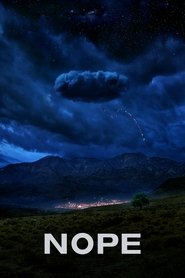
Between Nolan films, he shot Jordan Peele's Nope (2022), a science fiction horror film demanding an entirely different register. Open sky. Dry California land. Creatures visible from miles away. He remains one of the few DPs in studio cinema whose visual signature is legible regardless of director.
The Odyssey
The Odyssey completes something. According to Variety and Kodak, it is the first narrative feature shot entirely in the 15-perf IMAX format on 65mm film stock. Van Hoytema worked with Kodak to develop a black-and-white 65mm IMAX stock that had not previously existed. He and his crew re-engineered camera pressure plates to prevent light bleeding into the monochrome footage. For dialogue scenes, the production built a custom soundproof enclosure for the camera that reportedly weighed over 300 pounds, according to YMCinema. Nolan asked IMAX to redesign elements of its cameras during production, per CinemaCon 2026 reporting.
Every constraint on The Odyssey was a problem van Hoytema helped solve. The film is currently in IMAX and 70mm theaters.